聯合國兒童基金會 www.unicef.org.hk
四川的災民正活於水深火熱之中,您的捐贈能為他們解決燃眉之急,請捐款支持。
[電話] 2833-6139
[捐款] 匯豐:567-354014-005 [捐款] 中銀:012-875-1-081085-5
-------------------------------------------------------------------------------------
救世軍 www.salvation.org.hk
四川大地震救災行動四川7.8級大地震,大量民房倒塌,無數平民被活埋,請即捐款協助災民渡過難關。
[電話] 2783-2333
[捐款] 匯豐 580-149649-001 [捐款] 中銀 012-878-1-061887-6
-------------------------------------------------------------------------------------
香港世界宣明會(四川地震救援) www.worldvision.org.hk
中國三十年來最嚴重地震,地震災民等待救援。請即網上捐款或查詢捐款詳情。
[電話] 2394-2394
[捐款] 匯豐:018-554444-001
[捐款] 中銀:012-883-0-002666-2
Find us on facebook
- 「讚好」葉謝鄧 facebook
Low Cost Hong Kong Legal Service
- For Enquiries, please call 6419-9999 (Henry Chung, Hong Kong Lawyer & Advocate)
Civil Litigation, Criminal Defence & Mitigation: Fixed fee or hourly rate
Divorce, Child Custody, Maintenance: $5000 or hourly rate
Separation Agreement: $2000-$3500
Bankruptcy: $4500
Debt Restructuring by IVA or DRP: Fixed fee
Sale of Property: $4500-$8000
Notary Public: Fixed fee from $1000
Purchase of Property: $5500-$9000
Mortgage or Refinancing of Property: $4500-$8000
Redemption of Property: $1800
Deed Poll or Change of name: $500
General Power of Attorney:$1500
Special Power of Attorney:$1800 or up
Wills: $1000-$2000
Civil Celebrant of Marriages or Marry at Hong Kong law offices: $1900. Visit www.hkm.mobi
Probate & Estate Planning: Fixed Fee
Family Trust and Gifts: Fixed Fee
We have 25 Hong Kong Lawyers, 13 Law Offices.
About Yip Tse & Tang Solicitors & Notaries
- Hong Kong Legal Service
Yip, Tse & Tang, Hong Kong Lawyers: Low-cost Speedy Hong Kong Legal Services  Head
of Matrimonial
Department: Polly Hui: Divorce, Custody, Maintenance
Head
of Matrimonial
Department: Polly Hui: Divorce, Custody, Maintenance Senior Partner:Thomas
Tse<: Notary Public, Civil Celebrant, Properties Sale and Purchase, Mortgages
Senior Partner:Thomas
Tse<: Notary Public, Civil Celebrant, Properties Sale and Purchase, Mortgages Managing Partner:Charles
Tse: Notary Public, Civil Celebrant, Employees' Compensation Claims, Personal Injuries
Managing Partner:Charles
Tse: Notary Public, Civil Celebrant, Employees' Compensation Claims, Personal Injuries Partner:
Bankruptcy, Divorce, Deed Poll
Partner:
Bankruptcy, Divorce, Deed Poll Partner:
Bankruptcy, Divorce, Deed Poll
Partner:
Bankruptcy, Divorce, Deed Poll
Traffic
- Visits
平價香港法律服務
- 律師行:遍佈香港.九龍.新界
旺角.觀塘.荃灣.元朗.上水假日辦公
離婚(全無爭議): $4200〡分居協議書: $2000
破產: $4500〡樓宇買賣: $4500-$9000
按揭.轉按: $4500〡贖樓: $1800
改名契:即造: $500〡普通授權書:$800
簡單遺囑: $1000〡律師樓舉行婚禮: $1900起
國際公證人 Notary Public: $1000起〡破產期滿証明:$2000
中國委托公証人公証文書:最低定價
注意:以上不包雜費、收費只作參考
連結:律師行.法律服務
- Hong Kong Notary Public 葉謝鄧律師行:國際公證人事務
- Finding a Notary Public in Hong Kong SAR. 尋找香港國際公證人
- 錯誤進行IVA = 延誤破產期‧錯誤進行IVA = 花冤枉錢‧錯誤進入IVA = 生活費不足‧錯誤進入IVA = 捱苦過活‧錯誤進入IVA = 吊鹽水
- 旺角葉謝鄧律師行
- 不擔任破產受託人.只代表破產申請人.專注維護破產人士權益
- 香港公司註冊、成立香港公司、海外公司註冊
- 結婚$1900全費:律師行婚禮中心:旺角.灣仔
- 葉謝鄧律師事務所:草擬遺囑.辦理遺產承辦.遺囑認證
- DRP債務重組‧切勿隨便進行IVA債務重組
- 工傷.交通意外索償.僱員工傷補償.僱主疏忽.職業病索償 68389998
服務遍全港‧人人有律師
- Ask ytt on Net
Popular Links
- Hong Kong Civil Celebrant of Marriages, Solicitors, Lawyers & Notary Public
- Hong Kong Lawyers, Civil Celebrant of Marriages, Solicitors & Notary Public
- Hong Kong Lawyers, Advocates, Solicitors & Notary Public
- Notary Public 公證海外文件.合約.屋契
- IVA債務重組 IVA.hk
- 遺產承辦和信託法律 asset.hk
- 謝連忠律師議事論法網solicitor.hk
- 離婚、撫養權、贍養費 hkdivorce.com
- 刑事辯護、求情和保釋criminal.com.hk
- 工傷疏忽索償compensation.com.hk
Internet and Email Scams
Sometime in 2004, the Hong Kong Police managed to get hold of a Nigerian who have succeeded in cheating a lawyer employed at a leading Hong Kong law firm. The scam is widely known at “Nigerian Scam”. The police commented that it is hardly believable that someone could have been cheated in that way.
 The power of the Internet has made it all too easy for these scams to flourish. The perpetuators can send thousands of emails without cost and then wait for someone to response. Sometimes, you may even receive the same messages by different email accounts you use.
Those looking for big business or easy big money (often falsely claimed to be having millions of US dollars) are often tempted by these scams. The scam messages sounds that you can get big money easily. If you are really tempted to take part it will inevitably make you lost money.
These scams often reach your business email box unsolicited and pretend to be highly confidential and private. They are typically known as "Nigerian Scam" or “Lotto Scams”. The tactics are the same although the “stories” may be different.
The “Westpac Bank Scam” is extremely dangerous because it will extract your ebanking details by posing as the valid Westpac Internet Banking site. Recently, perpetrators has begun the same scam with the St George Bank. In Hong Kong, quite a number of faked bank sites were discovered by the Hong Kong Monetary Authority. All pretended to be sites licensed to practiced in Hong Kong.
The Lotto Scam
The Lotto Scam will send you an email announcing that you are the lucky winner of a lottery win, which could exceed 1 million US dollars, even though you have not participated before. The senders claim to be the lawful lottery companies and of course these claims are false and the emails are also false.
The following are instances pretending to be coming from the following lottery companies:
I
If you respond, an application form will be sent to you for your filling. The blanks will seek information about your bank account or ask you to pay a sizable sum of money to cover security, insurance, or administration costs. When they have obtained your information and your money, you would no longer hear from them.
InternetSolicitor.com and Corporate Community Participation
 InternetSolicitor.com was set up by Yip, Tse & Tang, Solicitors and launched in 1999. It is constituted by partners and solicitors of Yip, Tse & Tang, Solicitors.
Its objective is to serve the public and its clients through the Internet as an open and freely accessible international infrastructure. Yip, Tse & Tang was selected by the ITS Department, HKSAR Government as a Reference Case on use of e-commerce on professional services.
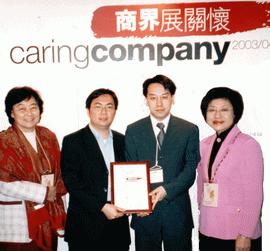
Yip, Tse & Tang was awarded the Caring Company Logo 2003/04 by the Hong Kong Council of Social Service in recognition of their effort in demonstrating good corporate citizenship and contributing to a caring community.
Photo: Representatives of Yip, Tse & Tang, Thomas Tse (partner) and Pierre Sun (Solicitor) receive the Caring Company Certification at the public ceremony.
法律擂台獨家FREE game
- iPhone App Download

Categories
- About Yip, Tse & Tang, Solicitors
- Certification Authority
- Contracting Online
- Copyright
- Copyright Exceptions
- Copyright in Music
- Copyright Licensing
- Copyright Works
- Data Protection & Privacy
- Data Protection in Direct Marketing
- Decided Cases on Domain Name Disputes
- Digital Certificates
- Digital Copyright
- Dispute Resolutions
- Domain Names Basic
- Domain Names Disputes and Resolutions
- Domain Names Transfer
- E-Commerce Basic
- E-Commerce Security
- E-Government
- Electronic Transactions Ordinance
- Focus
- Hong Kong Legal Information Online
- Hong Kong Post e-Cert
- Hyperlink and Infringement
- Internet and Computer Crimes
- Internet Trading (Online Stock)
- Legal Profession
- Legal Remedies on IPR Infringement
- Multimedia Products
- Obscenity on Internet
- Personal Data (Privacy) Ordinance
- Product Liability
- Public Key Infrastructure (PKI)
- Recovery Agents
- Registered Designs
- Smart Cards
- Software Asset Management
- Software Copyright
- Spamming
- Start-up to IPO
- Telecommunications
- Trade Practice
- Trust
- Use of Technology in law
- Website Operator Jailed for 18 months. Sex Traders Well-being Harmed
- Website Protection
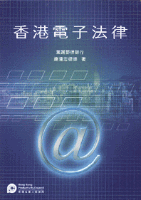
- 《香港電子法律》書介
- 四川大地震:捐款熱線.銀行賬戶:紅十字會.聯合國兒童基金.救世軍.宣明會
香港法律熱門網站推介
- 香港律師辦理分居離婚 www.pb.hk
分居紙‧分居書‧分居協議書‧分居証明‧分居証明信 - 1083 改名契 www.1083.com.hk
改名‧改姓要先辦改名契,即.即取.即用改名契‧收費:$500‧辦公時間可直接前往各律師行,毋須預約。 - 灣仔網站
灣仔網站:集商業‧政務‧國際盛事‧消遣‧娛樂‧專業服務於一身 - DRP(Debt Relief Plan)債務舒緩、低息還債 www.DRP.com.hk
債務舒緩.個人債務重組、香港破產、個人自願安排、拯救個人破產、DRP、破產接管、收數公司滋擾、投訴收數公司滋擾 - 遺產承辦、遺囑、立平安書、財產計劃 www.asset.hk
遺產承辦、財產保障、財務策劃、遺產分配、離岸信託基金、遺囑、遺囑認證 - 醫療疏忽索、診斷失誤償
醫療疏忽索償網:醫管局、醫生、醫院失誤、病人權益、醫療失誤、專業疏忽賠償、診斷失誤 - Hong Kong Notary Public 國際公證人事務 HongKongNotaryPublic.com
葉謝鄧律師行.國際公證人(Notary Public).謝連忠律師、謝連豐律師:公證海外文件、合約、屋契。見證簽名、法定聲明和誓章。鑑證身分。 - 刑事辯護、求情和保釋法律 www.crimes.hk
刑事辯護、求情和保釋:打擔保(差館或法庭)、打甩口供紙、盤問証人、決定應否在庭作証、結案陳詞、案例考究、打甩控罪、獲得輕判 - 按揭、物業轉按、物業加按、贖樓 www.conveyancing.com.hk
樓宇法律服務:樓宇買賣手續、物業按揭、按揭律師、聯名購買、物業轉按、物業加按、贖樓、居屋買賣、授權、政府收回土地、預售樓花 - 離婚、撫養權、贍養費、財產分配 www.matrimonial.hk
離婚、撫養權、贍養費、財產分配、監護、分居 - 898 網上法律大全 www.898.com.hk
香港網上法律法律大全 - 法周刊 www.solicitor.com.hk
葉謝鄧律師行:香港法律入門網站 - 工傷索償、交通意外傷亡 www.pisolicitor.com
工傷索償、交通意外傷亡、人身傷亡、人身受傷:只代表傷者、不代表保險公司 - 葉謝鄧律師行 www.ytt.com.hk
設於香港的律師事務所 - 電子交易、網址糾紛、電腦犯罪
電子交易、網址糾紛、電腦犯罪、保安、網上理財、個人資料私隱、電子証據、網上誹謗、互聯網版權、司法管轄權 - 破產網 www.hkbroke.com
香港破產、債務重組(IVA)、債務一筆清、個人自願安排、破產條例、分期還款